
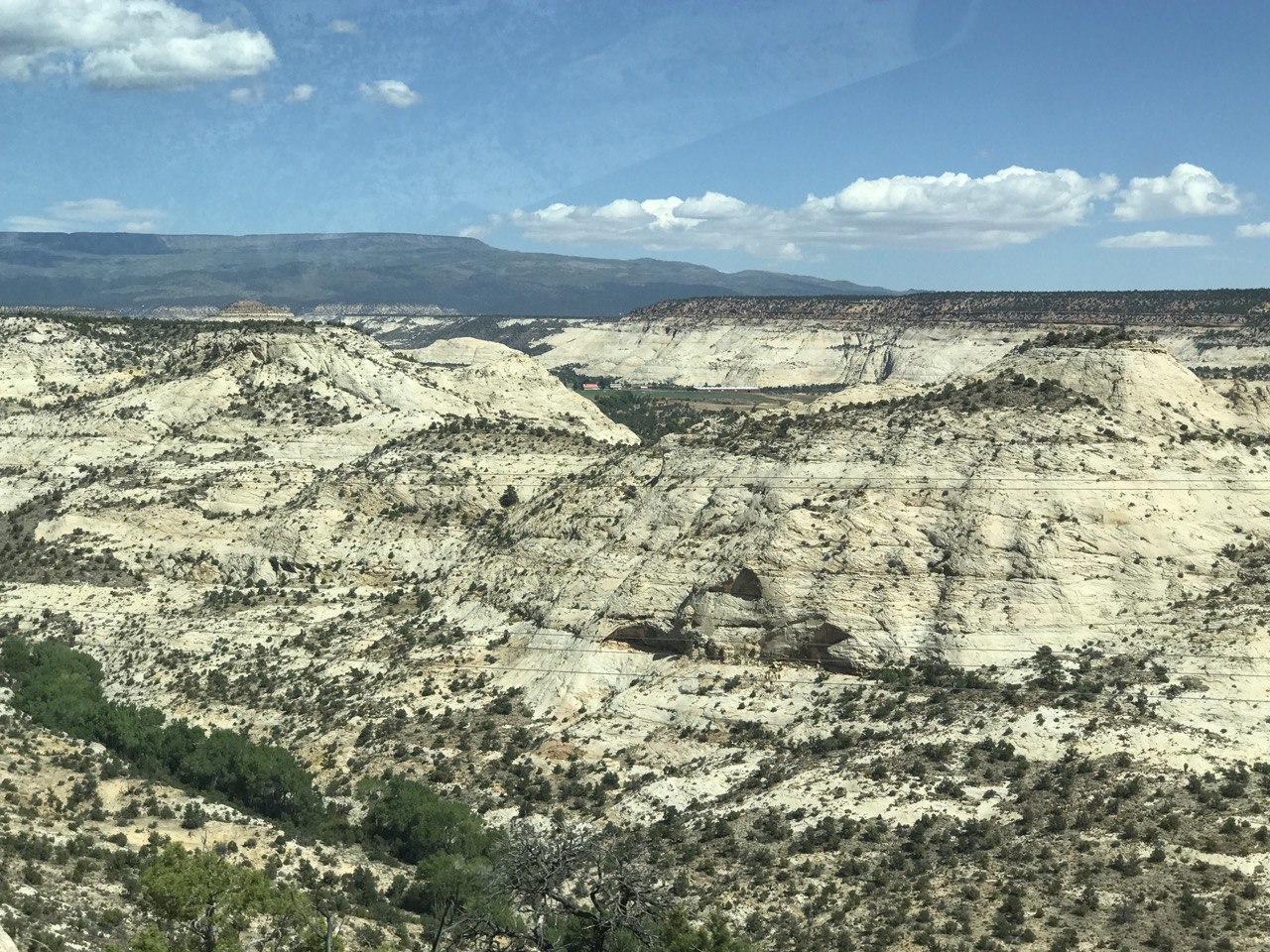
The histories of Boulder and Escalante are stories of incredible strength and perseverance. The rugged nature of the area and its extreme isolation still make life here challenging as well as rewarding. To consider making a life for yourself in such a remote and desolate place, over one hundred and thirty years ago, gives credit to the incredible faith carried by those early pioneers and settlers.
The town of Boulder was tied directly to the earlier mentioned explorations and surveys of the region. However, actual settlement of this area would take another 13 years due to its surrounding physical barriers. In 1879, two ranchers from Wayne County (north of Boulder) who had been seeking “greener pastures” found themselves on the grassy hills and slopes of Boulder Mountain. Thousands of cattle and sheep were temporarily spending their summers on the mountain.
Between 1889 and 1891, permanent settlement of Boulder had begun. Ranches and dairies began to spring up along the creeks and natural pastures of the area. In 1896, there were enough families living here that a school was erected and a full-time teacher from Escalante was employed. In 1901, a sawmill and molasses mill were up and running, providing the community with much-needed cut lumber and some sweets! An official pack mule “mail trail” route from Escalante was established in 1906, remaining the primary means of mail delivery for Boulder until 1935. This was the year the Civilian Conservation Corps (CCC) completed the scenic 45-mile long Hell’s Backbone Road, bringing Boulder its first vehicle access. Soon vehicles replaced the mules and the “mail trail,” thus ending the last mail delivery by mule in the United States.
Both towns ultimately settled into the familiar country lifestyle of ranching, farming, and creating the necessities of life out of available resources. Many, if not most, of the people living here are of direct lineage to those hardy pioneers that settled both towns. The names on the roster from the first town meeting of 1876 would not look that different from ones you would find today. There is a real sense of community here, and local folks are proud to say this is their home. And there has been a strong commitment to restore and preserve many of the original buildings in the town. Take the time to look over the old barns and historic brick homes that fill the back street and pastures of our valley. It’s like stepping into a living Western museum…credit: http://www.escalanteut.com/about-us/history
